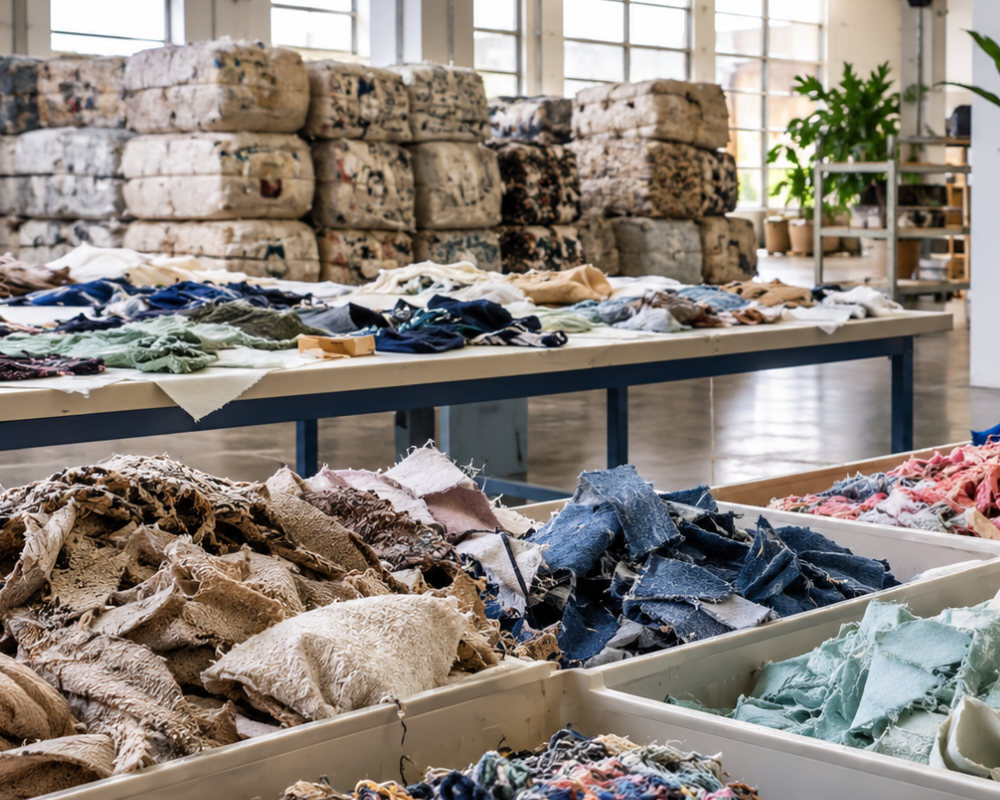
Textile waste has become an increasingly important issue for organisations across every sector. From uniforms and workwear to branded merchandise, promotional products and surplus stock, businesses generate significant volumes of textiles throughout their operations.
As sustainability expectations continue to evolve, organisations are under growing pressure from customers, employees, investors and stakeholders to demonstrate responsible environmental practices. At the same time, many businesses are seeking practical ways to reduce waste, improve resource efficiency and support wider ESG objectives.
Reducing textile waste is not simply about disposing of materials differently. It requires organisations to consider the entire lifecycle of textile products, from procurement and use through to end-of-life management.
The good news is that there are a range of opportunities available to help businesses reduce textile waste while supporting operational, environmental and commercial objectives.
This guide explores the causes of textile waste, the challenges organisations face and the practical steps businesses can take to manage textiles more responsibly.
Why Textile Waste Matters
Textiles play an important role in many organisations.
Whether used for employee uniforms, workwear, PPE, hospitality garments, branded merchandise or promotional products, textiles often represent a significant operational resource.
However, textiles also generate waste.
Common sources of textile waste include:
- Employee turnover
- Rebranding programmes
- Product recalls
- Surplus inventory
- Damaged stock
- Seasonal changes
- Wear and tear
- Changing operational requirements
Historically, many unwanted textiles were viewed as a disposal issue.
Today, they are increasingly viewed as a resource management challenge.
Businesses are recognising that reducing textile waste can help:
- Improve sustainability performance
- Support ESG objectives
- Reduce operational waste
- Improve resource efficiency
- Strengthen environmental reporting
- Demonstrate responsible business practices
As a result, textile management is becoming a growing priority across a wide range of industries.
Understanding Where Textile Waste Comes From
Before organisations can reduce textile waste, they must first understand how it is being generated.
In many cases, waste occurs long before garments reach the end of their useful life.
Over-Ordering
One of the most common causes of textile waste is over-purchasing.
Businesses may order excessive stock to accommodate future growth, uncertainty in workforce numbers or contingency planning.
While this may seem sensible from an operational perspective, it can result in large volumes of unused textiles accumulating over time.
Poor Inventory Management
A lack of visibility across stock holdings can lead to duplicate purchases and unnecessary replacement programmes.
Without effective inventory management, organisations may dispose of garments that still have value.
Rebranding Initiatives
Changes to logos, colours or corporate identity can quickly render large volumes of uniforms and merchandise obsolete.
While the garments themselves may remain perfectly usable, branding changes often require replacement.
Employee Turnover
Staff departures frequently result in uniforms being returned, stored or discarded.
Without structured processes in place, these garments can contribute significantly to textile waste.
Product and Specification Changes
Changes in health and safety requirements, operational standards or procurement specifications can also create surplus textiles.
Understanding these causes allows organisations to identify opportunities for waste reduction before products reach the end of their lifecycle.
Start With Prevention
The most effective way to reduce textile waste is to avoid creating it in the first place.
This principle sits at the top of the waste hierarchy and often delivers the greatest environmental benefit.
Organisations can reduce waste generation through:
Smarter Procurement
Purchasing only what is needed helps minimise surplus stock and reduces the risk of unnecessary waste.
Improved Forecasting
Better workforce planning and inventory forecasting can reduce over-ordering and excess inventory.
Durable Product Selection
Investing in higher-quality garments may increase product lifespan and reduce replacement frequency.
Inventory Visibility
Maintaining accurate stock records can help businesses maximise the use of existing garments before purchasing additional items.
Waste prevention is often overlooked because it does not involve a visible recycling or recovery process.
However, avoiding waste entirely is frequently the most effective solution.
Extend the Life of Existing Textiles
Many garments are discarded before they have reached the end of their usable life.
Extending product lifespan is one of the simplest ways to reduce textile waste.
Reuse
Where garments remain fit for purpose, organisations can often redistribute them internally.
Examples include:
- Reissuing uniforms
- Transferring stock between locations
- Maintaining contingency inventory
- Supporting temporary workforce requirements
Repair
Minor damage does not always require replacement.
Repair programmes can help extend garment life through:
- Zip replacement
- Seam repairs
- Reinforcement of worn areas
- Replacement fasteners
Refurbishment
Professional cleaning, maintenance and refurbishment can improve garment longevity while maintaining appearance and performance.
By extending garment life, businesses can reduce both waste generation and procurement costs.
Improve Uniform and Workwear Management
Uniforms and workwear often represent one of the largest textile streams within an organisation.
Implementing a structured management programme can significantly reduce waste.
Key considerations include:
Uniform Return Programmes
Encouraging employees to return garments when they leave the organisation helps prevent unnecessary losses.
Centralised Distribution
Central control over workwear allocation can improve visibility and reduce duplication.
Garment Tracking
Monitoring garment lifecycles allows organisations to understand usage patterns and identify opportunities for improvement.
End-of-Life Planning
Considering disposal routes before garments become obsolete helps support more responsible outcomes.
A proactive approach to workwear management can generate both environmental and operational benefits.
Explore Reuse Opportunities
Reuse is widely recognised as one of the most effective ways to reduce textile waste.
Where appropriate, organisations should evaluate whether textiles can continue to serve a useful purpose.
Potential opportunities may include:
- Internal redistribution
- Secondary operational uses
- Training environments
- Community initiatives
- Controlled donation programmes
The suitability of reuse will depend on factors such as garment condition, branding requirements and security considerations.
Not every textile stream will be suitable for reuse, but where viable, it can significantly reduce waste generation.
Consider Textile Recycling
When reuse is no longer possible, recycling may provide an alternative route.
Textile recycling helps recover value from materials that would otherwise become waste.
Depending on material composition and available recovery routes, textiles may be processed into new products or used within wider material recovery applications.
Examples of potentially recyclable items include:
- Uniforms
- Workwear
- Corporate clothing
- Promotional textiles
- Certain PPE products
- Branded garments
However, recycling should not be viewed as a universal solution.
Factors such as contamination, fibre composition, branding and security requirements can influence suitability.
Organisations should seek appropriate guidance when assessing available recycling options.
Manage Branded Textiles Responsibly
Branded textiles introduce additional considerations.
Unlike ordinary clothing, branded garments remain connected to an organisation’s identity long after they leave active use.
Examples include:
- Company uniforms
- Promotional merchandise
- Corporate clothing
- Event apparel
- Branded stock
Before considering reuse, donation or recycling, organisations should evaluate:
- Brand protection requirements
- Security implications
- Reputational considerations
- Compliance obligations
Responsible textile management requires balancing sustainability objectives with the need to protect the organisation’s brand and reputation.
Use Data to Drive Improvement
Many organisations focus on waste management without measuring performance.
However, data is often one of the most valuable tools for reducing textile waste.
Tracking information such as:
- Volumes generated
- Garment lifecycles
- Recovery outcomes
- Recycling rates
- Waste reduction initiatives
can help identify trends and opportunities for improvement.
Data also supports ESG reporting, sustainability disclosures and internal decision-making.
As reporting requirements continue to evolve, visibility and traceability are becoming increasingly important.
Build Circular Thinking Into Your Organisation
The concept of circularity is becoming increasingly relevant within textile management.
Traditionally, products followed a linear path:
Purchase → Use → Disposal
A circular approach seeks to maximise value throughout the product lifecycle.
This may involve:
- Reducing consumption
- Extending product life
- Recovering materials
- Supporting recycling initiatives
- Minimising waste generation
By adopting circular principles, businesses can improve resource efficiency while reducing environmental impact.
The goal is not simply to dispose of textiles differently, but to rethink how they are managed throughout their lifecycle.
Develop a Long-Term Textile Waste Strategy
Reducing textile waste is rarely achieved through a single initiative.
The most successful organisations adopt a long-term strategy that combines:
- Waste prevention
- Reuse
- Repair
- Redistribution
- Recycling
- Responsible end-of-life management
This approach allows businesses to continuously improve performance while adapting to changing operational and sustainability requirements.
A structured strategy also helps ensure consistency across departments, locations and supply chains.
Reducing textile waste is becoming an increasingly important priority for organisations seeking to improve sustainability performance, increase resource efficiency and support wider ESG objectives.
While there is no single solution, businesses have a range of opportunities available to reduce waste throughout the textile lifecycle.
By focusing on prevention, extending product life, improving workwear management, exploring reuse opportunities and considering responsible recycling routes, organisations can significantly reduce the volume of textiles that become waste.
Most importantly, reducing textile waste should not be viewed solely as an environmental challenge. It is an opportunity to improve operational efficiency, strengthen sustainability performance and create greater value from existing resources.
As expectations continue to evolve, organisations that take a proactive approach to textile management will be better positioned to meet both environmental and business objectives while contributing to a more resource-efficient future.